Features
Name:
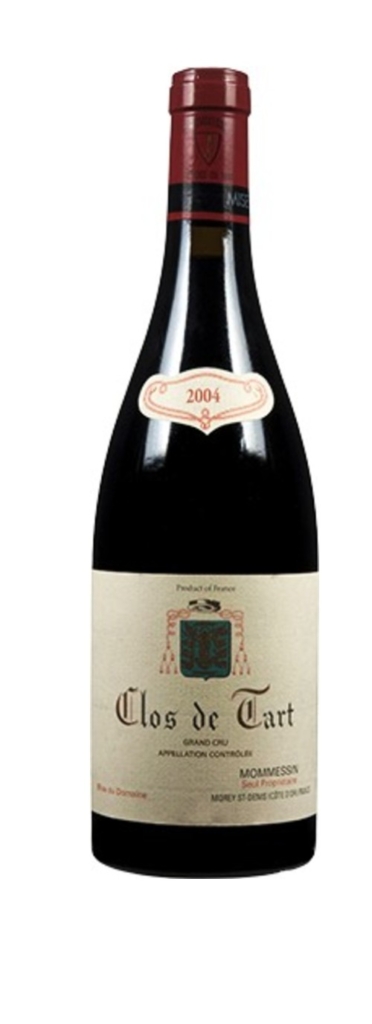
Clos de Tart Grand Cru Monopole 2004
Terrain:
Argiloso-Calcareo
Cellar
he Clos de Tart, as we know it today, was founded in 1141 by the Cistercian nuns of the Abbey of Tart, a dependent house of the Abbey of Cîteaux. It is truly remarkable that, despite a long history of some 900 years, the Clos de Tart estate has never been fragmented or divided. Today, it is in fact the largest Grand Cru Monopole in Burgundy. The vineyards, as well as the ageing and vinification facilities, are always located on exactly the same site. Clos de Tart has a long and beautiful history behind it with only four owners over nine centuries. In 2018, Clos de Tart was acquired by the Pinault family. Owners of several historic estates, including Château Latour in Pauillac and the Domaine d'Eugénie in Vosne-Romanée. The Pinault family continues to write the history of this famous 7.53-hectare plot in Morey-Saint-Denis through Artemis Domaines.
Description
The Clos de Tart single-vineyard Pinot Noir vineyard is located in the heart of the Côte de Nuits, in the village of Morey-Saint-Denis. This 7.53-hectare vineyard is truly unique for the diversity of its terroir, which is ancient and prestigious, with a 900-year-old heritage. This is an excellent, long-lived wine, silky on the palate, with great tension, delicious energy and a fresh finish.
Organoleptic characteristics:
The nose offers a lovely freshness with aromas of red fruits, currant and raspberry, as well as spicy notes such as tobacco, wet leaves and cloves. Silky on the palate, with great tension, delicious energy and a fresh finish.
Storage time:
over 30 years
Vinification
The grapes, from the different microclimates of the Clos, are selected one by one on the sorting table to keep only the best. They are then vinified with a percentage of the entire harvest that varies according to the quality of the stalks and their ripeness. The grapes are vinified in separate wooden vats of different capacities, adapted to the surface area of each sub-stalk. The yeasts involved in the alcoholic fermentation are 100% indigenous. Malolactic fermentation, on the other hand, is entirely natural (no inoculation of lactic acid bacteria takes place).
Acknowledgements
2021 Robert Parker96/100