Features
Name:
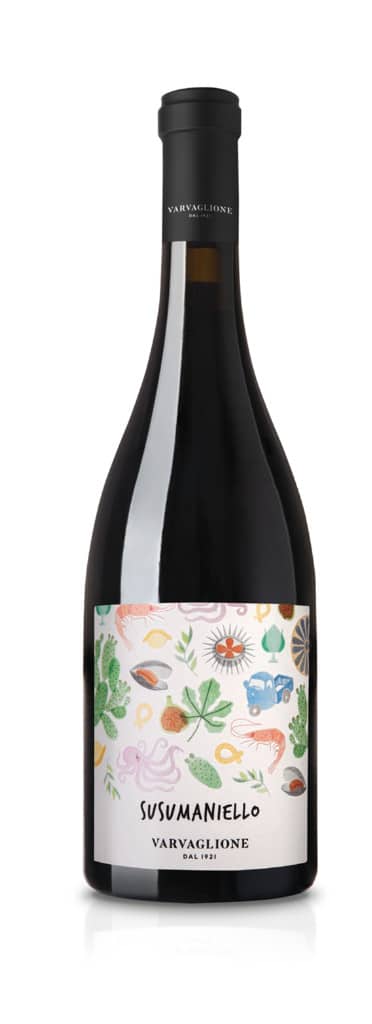
Susumaniello Salento PGI 2023
Terrain:
clayey sandy
Cellar
It is no less than three generations (since 1921) that the Varvaglione winery has established itself as one of the most outstanding wineries in the Apulian wine scene.
In this historic company located in Leporano, in the province of Taranto, within the territory known as Salento, experience and tradition have found full synergy over time through the use of the most advanced winemaking technology and great attention to the needs of the market.
Today, the Varvaglione 1921 brand is recognised in the national and international markets and is supported by a prestigious list of wines that have won numerous prizes and awards.
The focus of the Taranto-based company is on local wine varieties such as: Primitivo di Manduria, Negroamaro, Malvasia and Aglianico from red grapes, Verdeca, Falanghina, Malvasia and Fiano from white grapes. Furthermore, as far as international grape varieties are concerned, the winery vinifies Chardonnay respecting the characteristics of the Salento territory. Varvaglione 1921 represents one of the oldest and most award-winning wineries in southern Italy. In 2011, it celebrated its 90th anniversary by launching a prestigious wine called 'Papale'. Varvaglione 1921 is now present in more than 36 countries around the world and bases its wine production on more than 120 hectares of land dedicated to the cultivation of Varvaglione 1921 brand wines.
Description
A grape variety that was on the verge of extinction, but thanks to the efforts of local winegrowers it has recently come back into the limelight. Varvaglione presents us with a more structured version with maturation in large barrels, enclosed in a nice, typically Apulian-style bottle.
Organoleptic characteristics:
Intense ruby red colour. Immersing the nose in the glass, one perceives aromas of prunes, black cherry, cherry jam and slight toasting.
The palate is round and structured dominated by ripe tannins.
Vinification
Pre-fermentation maceration of the destemmed grapes at a temperature of 12-14°C to extract the characteristic aromas, followed by fermentation for 15-20 days at a controlled temperature of 24-26°C. Then the wine is separated from the skins to initiate malolactic fermentation. Maturation of six months in large casks follows.
Acknowledgements