Features
Name:
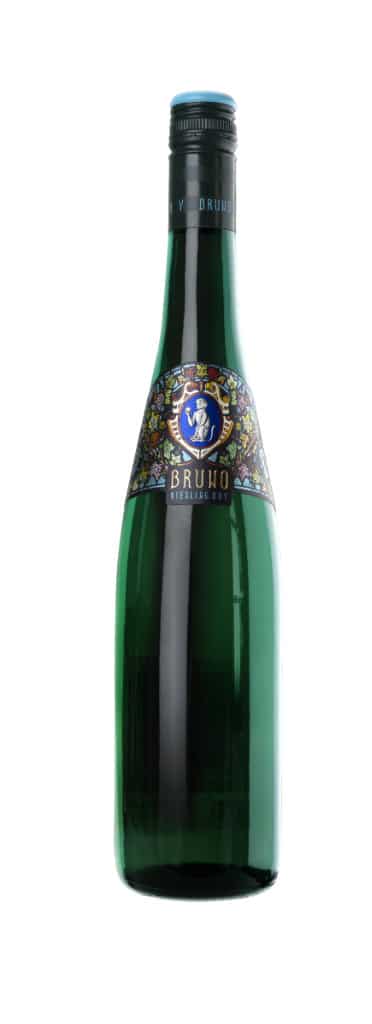
Bruno Riesling Dry 2022 Karthäuserhof
Terrain:
Arid and slate subsoil and south-west exposure.
Cellar
Karthäuserhof stands in the small town of Trier, within the Mosel-Saar-Ruwer region, one of the most renowned for the production of white wines from riesling grapes is a historic winery dating back to 1335, when Carthusian monks started the first production within the monastery, until it was later bought by the ancestors of the current owners, so that Karthäuserhof today boasts the seventh generation with Albert Behler, maintaining the stellar international reputation of Karthäuserhof, which it has maintained for the past 200 years. The company played a key role in the birth of the VDP, which today unites the 200 best wineries in Germany, resulting in their own wine classification. Few commercial entities can boast such a long and illustrious history. There are only 80 companies in the world older than Karthäuserhof, and of these only seven wineries
Description
The fertile and picturesque landscapes of the Mosel-Saar-Ruwer region give us these Riesling grapes, from which the winemaker of the German Karthäuserhof winery evokes this white wine with refinement and sensitivity. In order to preserve all the delicate aromas that the vine produces, all grapes are harvested by hand, pressed with light pressure and as little as possible in the cellar. There is no clarification, sedimentation occurs naturally, only sulphur is added. A fun wine, which is equally enjoyable on its own and with food thanks to its low alcohol content.
Organoleptic characteristics:
Straw yellow colour with golden highlights. The nose gives an early indication of what is to come on the palate, fresh citrus, grapefruit and citron, floral of camomile, followed by fruity tones of apple and pear and many spicy aromas. On the palate a mineral vein with a good balance between softness and low alcohol content with a savoury finish of great drinkability and pleasantness.
Storage time:
3-5 years
Vinification
Spontaneous fermentation with indigenous yeasts. This is followed by ageing in steel in order to preserve the aromas, freshness and flavour of the grapes.
Acknowledgements
2020/21 Robert Parker 90/100
2016/18/19/20 James Suckling 90/100