Features
Name:
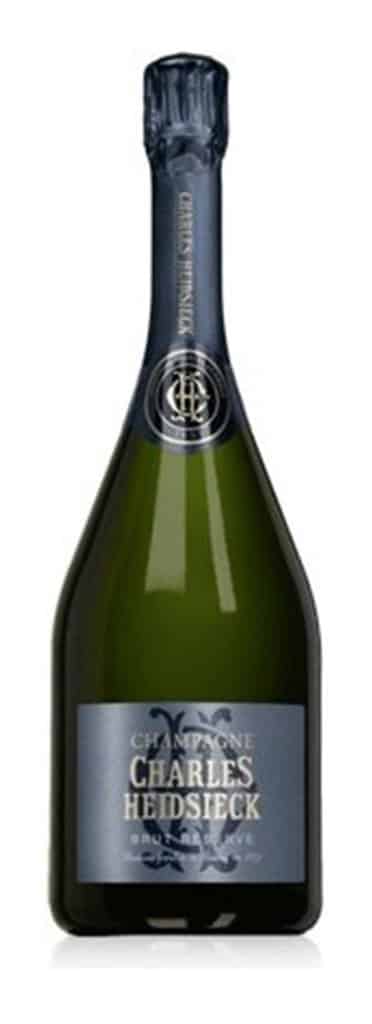
Brut Réserve without case
Terrain:
calcareous and rich in gypsum, largely composed of calcite grains
Cellar
Charles-Camille Heidsieck was born in 1822. This happy event took place 37 years after his great-uncle founded the Champagne Heidsieck et Cie House.
Little Charles grew up among grapes, loved by his mother, Emilie Henriot, and his sisters, in a family governed by the traditions of Reims and Prussian rigour.
Educated, he distinguished himself by his integrity and elegance.
At the age of 29, Charles took his destiny into his own hands and founded a Maison in his own image. His audacity, his adventures and the fame of his wines would make him a legend of his time.
His distinctive aesthetic choices made the Maison unique and renowned among all, or as it was known: Typiquement Charles.
Charles was the cornerstone of a distinguished lineage.
His ambitions served to guide his descendants through the centuries.
In 2011, the Descours family took over the Maison with the aim of ensuring its international reputation.
Description
It is with BRUT RÉSERVE that the Maison has expressed the quintessence of its style. To be even more qualitative, the juices are exclusively first-pressed and the wine benefits from a slow and long maturation of 3 to 4 years, well beyond the norms of the region. Particularly recognisable, this cuvée is the fruit of a unique blend
Organoleptic characteristics:
The Brut Réserve boasts a deep golden hue. Delicate, lively and persistent bubbles are the result of long, slow maturation in chalk cellars.
Thanks to the 40% of reserve wines, the blend offers a complex, elegant and voluptuous nose with a touch of freshly baked brioche, rich toasted notes and sun-kissed fruit - mango, apricot and mirabelle plum - accented by dried fruit, pistachio and almond.
The texture resembles a crunchy layer of nougat on a velvety cream pastry, filled with fleshy red plums and ripe cherries.
Storage time:
0-4 years
Vinification
First alcoholic fermentation in steel containers and malolactic fermentation fully carried out, then re-fermentation in the bottle according to the Champenoise method
Acknowledgements
Robert Parker 92/100
James Suckling 92/100
Wine Spectator 91/100
Decanter 92/100