Features
Name:
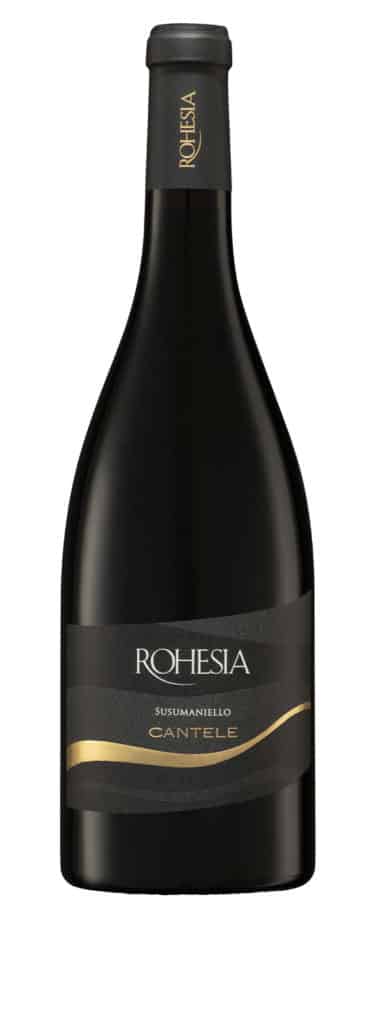
Rohesia Susumaniello Apulia PGI 2021
Terrain:
Upper Quaternary Salento clay limestones
Cellar
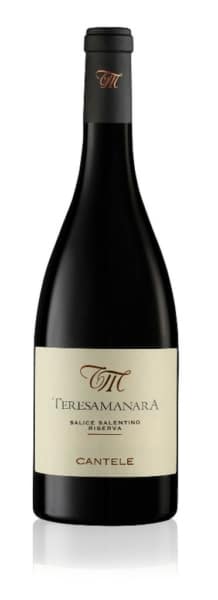
This story has as its beginning a glimpse, as its prologue the early 1900s. From that hourglass, suspended over a sepia-coloured Italy, comes the destiny of a family and a company bearing the name of Giovanni Battista Cantele. It was he who first set eyes on the centre of this story; it happened in Imola, at the height of the war. Giovanni Battista Cantele had left behind Pramaggiore, where he was born, to reach the exact centre of his life. It was shaped like the profile of a woman who would one day become his wife, the mother of his sons - Augusto and Domenico - and would inspire the wine that now bears his name: Teresa Manara.
The Great War was over
Giovanni Battista had approached the bulk wine market, a world that began in Apulia, where he would go to choose the dark nectar to take away, northwards.
When Teresa Manara saw Lecce for the first time, the time she decided to accompany her husband on one of his many business trips, she felt invaded by the same kind of silence that had enraptured Giovanni years before. A sudden, irresistible fascination. So much so that she could not help but stay. Just as migrants were leaving Salento to make ends meet in the big industrial cities, so far from a harsh land, almost an island.
Augusto, the teenage son, was to found Cantine Cantele one day in 1979, together with his father and brother Domenico after studying at the Viticulture Research Centre in Conegliano and working in the Veneto wineries with a particular passion for white wines. In the Seventies, as the world was changing once again, Augusto joined his family in Lecce and began working as a consultant in Guagnano and Salice Salentino until the early Nineties, when a few hectares of vineyards were purchased and Cantele wines were produced.
Today, it is the grandchildren of Teresa Manara and Giovanni Battista Cantele who continue the writing of this family tale poured into many glasses. Augusto Cantele's sons, Gianni and Paolo, and Domenico's children, Umberto and Luisa. A gaze unites them, a liquid talent, a dream called wine.
Description
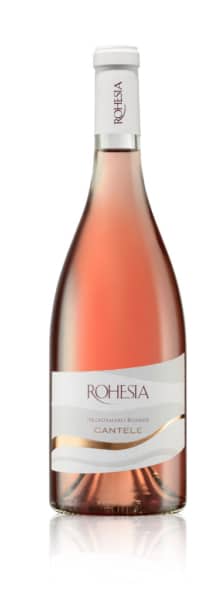
From medieval Latin, the name of this wine carries within it its colour, the chromatic symbolism of its masculine and feminine nature, its delicate ambivalence.
The red rose speaks to us of a love, which is a wine, capable each time as the first time of closing our eyes with a kiss. That red poured into the goblet, is the irreversible heart of Susumaniello that lets itself be tasted as it ravishes us to take us into the deep pleasure we have chosen.
Organoleptic characteristics:
Colour: Intense ruby red, with faint violet reflections.
Nose: Bouquet composed of red fruits, raspberries and plums. Cinnamon, sour black cherry, red rose petals and, in the finish, white pepper are also identifiable.
Palate: The taste is characterised by a good balance between softness and alcohol. A wine with soft tannins, with good freshness and great drinking pleasure.
Storage time:
A ready wine, with delicate olfactory evolutions in the following 4-5 years, followed by taste evolutions oriented towards a decrease in the tannic component.
Vinification
After destemming and crushing, the must macerates with the skins for 6-8 days. The fermentation temperature is kept within 22-24°C.
Acknowledgements