Features
Name:
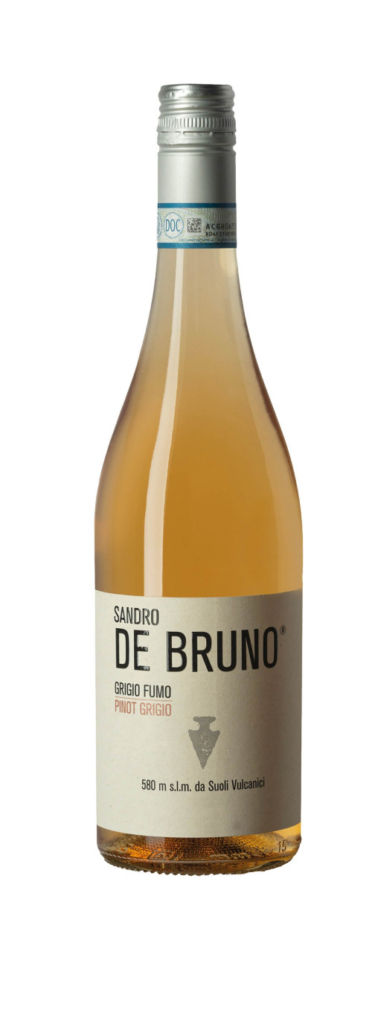
Grigio Fumo Pinot Grigio delle Venezie DOC 2022
Terrain:
volcanic soil
Cellar
L'Azienda Agricola Sandro de Bruno, was established in 2002 by Sandro Tasoniero and his wife Marina Ferraretto, with the aim of producing wines that best represent the vocation of the territory in which they are born. The wine-growing area is located in the Soave and Lessini Mountains, between the municipalities of Montecchia di Crosara and Terrossa di Roncà, volcanic and particularly suited lands. In the vineyard, the principles of Integrated and Sustainable Agriculture are applied in all the processes that produce the wine, from the vineyard to the cellar.
This involves the use of ecologically sustainable and environmentally friendly farming techniques to preserve the natural environment. Interventions are therefore reduced to a minimum, aimed only at necessity and aimed at achieving a natural and stable balance without interfering with nature. Fertilisation is only organic and certified, without any chemical synthesis products, as is the removal of weeds in the vineyard, which is carried out without the use of synthetic herbicides. The wines originate from volcanic soils, where the grapes, thanks also to the excellent exposure, develop great character and mineral aromas.
Description
Grigio Fumo is produced from 100% Pinot Grigio grapes on volcanic soils located at 580 m above sea level in the Monte Calvarina area, Verona
Organoleptic characteristics:
Bright and shiny soft pink colour. The nose is rich and enveloping, with great complexity and elegance. Bouquet
captivating, evolving from floral notes of wisteria, orange blossom, acacia and daisy, towards ripe fruity hints of yellow peach, melon and
mandarin, followed by a delicate iodine mineral note and hints of hay. The sip is full and persistent. The plumpness of the sip is
perfectly balanced by freshness and enveloping savouriness. Finish of great olfactory correspondence, with citrus and saline returns.
Storage time:
2-4 years
Vinification
Manual harvesting in crates during the first ten days of September. Grape selection and destemming, followed by cryomaceration in a closed press at
5 C° for 12 hours and soft pressing. Before fermentation, the must is decanted. Fermentation proceeds in stainless steel, after which the noble lees are preserved by performing weekly bâtonnage and stored for 6 months.
Acknowledgements