Features
Name:
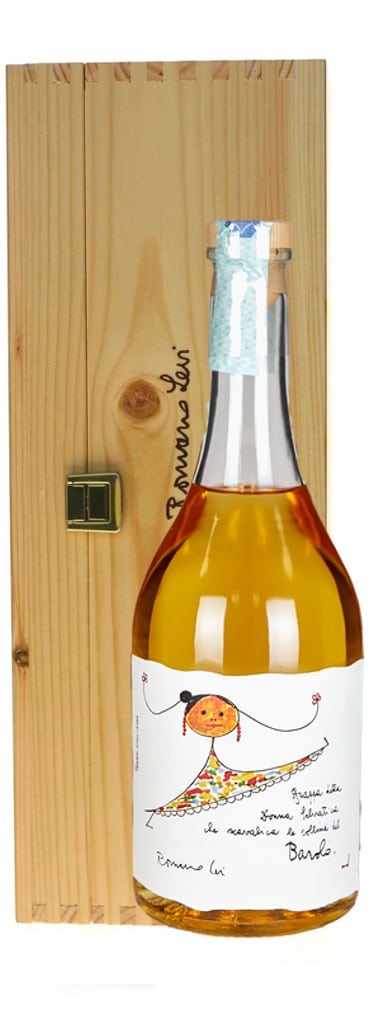
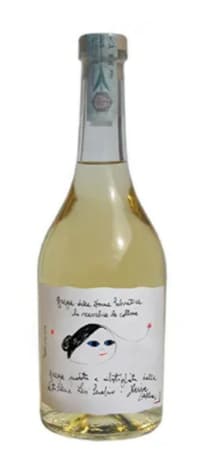
Grappa di Barolo Romano Levi in a wooden box
Terrain:
Marls and sandstones
Cellar
The Levi distillery is the daughter of a great tradition and thanks to Lidia and Romano Levi, it has met art, dressing up with labels made by great names, becoming collectors' items. Romano Levi, nicknamed "il Grappaiolo Angelico" by Luigi Veronelli, inherited the distillery in the Langhe region of Neive from his father Serafino when he was just 17 years old. He kept the same and only discontinuous direct-fire copper still he worked with for 63 years, which is still the only one in the world still in operation today. His sister Lidia, on the other hand, was always busy studying the marc and researching aromatic herbs. Today the distillery-house is a living museum that continues to distil according to tradition, thanks to friends who still jealously guard the last grappas still left to age in casks. They are fiery grappas, 'wild' as the Maestro liked to call them, with a unique and inimitable taste.
Description
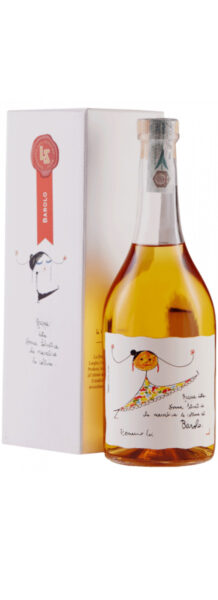
Grappa di Barolo is the only Italian grappa recognised at European level as 'Geographical Indication', which characterises its origin and production regulations. The Grappa di Barolo produced by the Romano Levi distillery is made from Barolo marc from the areas of Barolo, Serralunga, La Morra and Grinzane Cavour. The marc, fresh and still dripping with must, is immediately compressed in underground pits in order to obtain a natural tanning process capable of extracting the most varietal aromas. An elegant and refined bottle that is sure to be an appreciated gift for all Grappa enthusiasts.
Organoleptic characteristics:
Intense amber colour
Intense fragrant aromas with intense notes of tobacco and chocolate and woody nuances
Dry, velvety palate with initial notes of tobacco and intense finish of wood and spices
Storage time:
up to 30 years
Gastronomic pairings
Vinification
The marc, fresh and still dripping with must, is immediately compressed in underground pits in order to obtain a natural tanning process capable of extracting the most varietal aromas. Distillation takes place in a discontinuous copper pot still that operates on direct fire. At the end of the process, the Grappa is transferred into classic Piedmontese oak casks of approximately 700 litres, where it is left to rest for 38 months.
Acknowledgements